
Whether you live at Mar Menor Golf Resort, Santa Rosalía Lake & Life Resort, La Torre Golf Resort, or simply in Torre-Pacheco or Los Alcázares, you’re within easy reach of some of the best — and most varied — coastline in southeast Spain: calm lagoon water a few minutes away, wild protected coves, golden Blue Flag sand, lively city beaches in Cartagena, and even a striking black volcanic-sand beach. Here’s the full picture, with a quick note on the type of beach and the address for each, so you can plan your day out.
Los Alcázares — the quick dip (10–15 min)
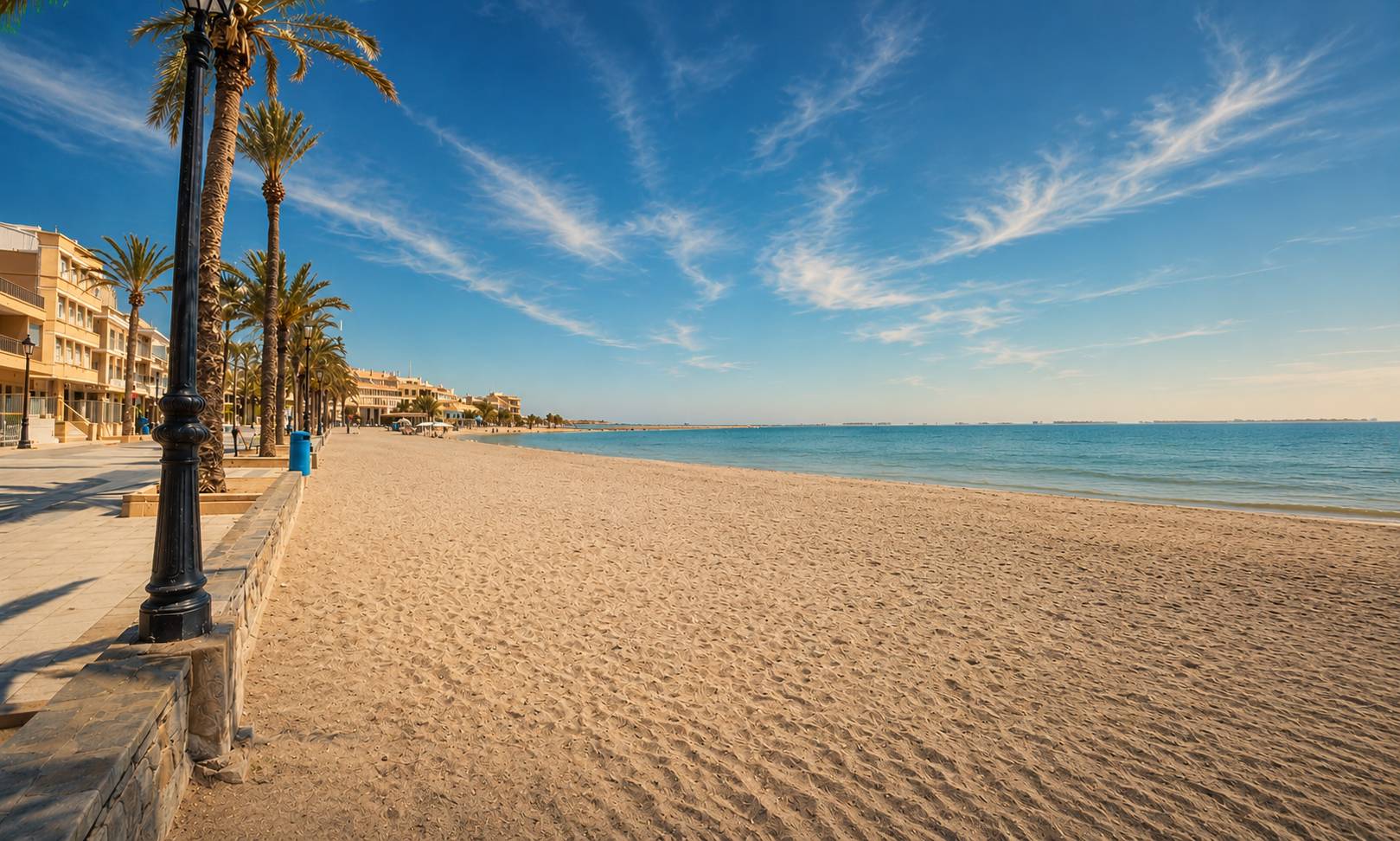
Sandy beach. The closest option, and the one most residents use for an after-work swim. Los Alcázares sits directly on the Mar Menor lagoon, so the water is shallow, calm, and noticeably warmer than the open sea — ideal for families with young kids or anyone who isn’t a fan of waves. The town has a long seafront promenade lined with chiringuitos, ice cream shops, and restaurants, plus plenty of parking near the beach.
Address: Paseo Marítimo, 30710 Los Alcázares, Murcia, Spain (Get Location).
La Manga del Mar Menor — best of both seas (30–35 min)
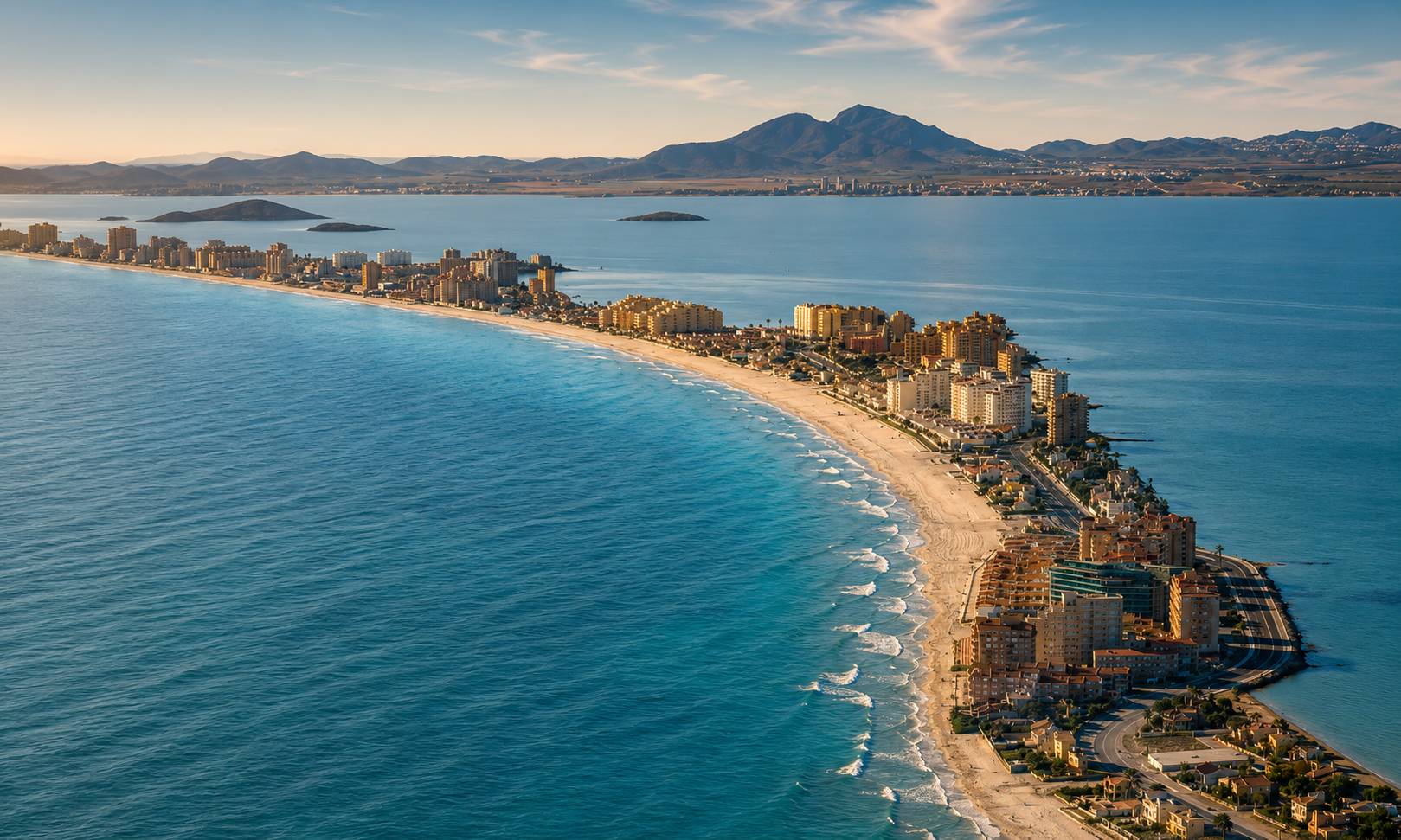
Sandy beach on both sides. La Manga is the famous 21-km sand spit that separates the Mar Menor from the open Mediterranean — which means you can choose your beach depending on your mood. On the lagoon side you get calm, shallow water; cross to the Mediterranean side and you get proper waves, clearer blue water, and a livelier beach-club atmosphere. Playa del Pedruchillo and Playa Galúa are good starting points if you’ve never been. Parking can get tight in peak summer, so an early start pays off.
Address: Gran Vía de La Manga, 30370 La Manga del Mar Menor, Murcia, Spain (Get Location).
Cabo Roig & La Zenia (Orihuela Costa) — worth the drive (40–45 min)
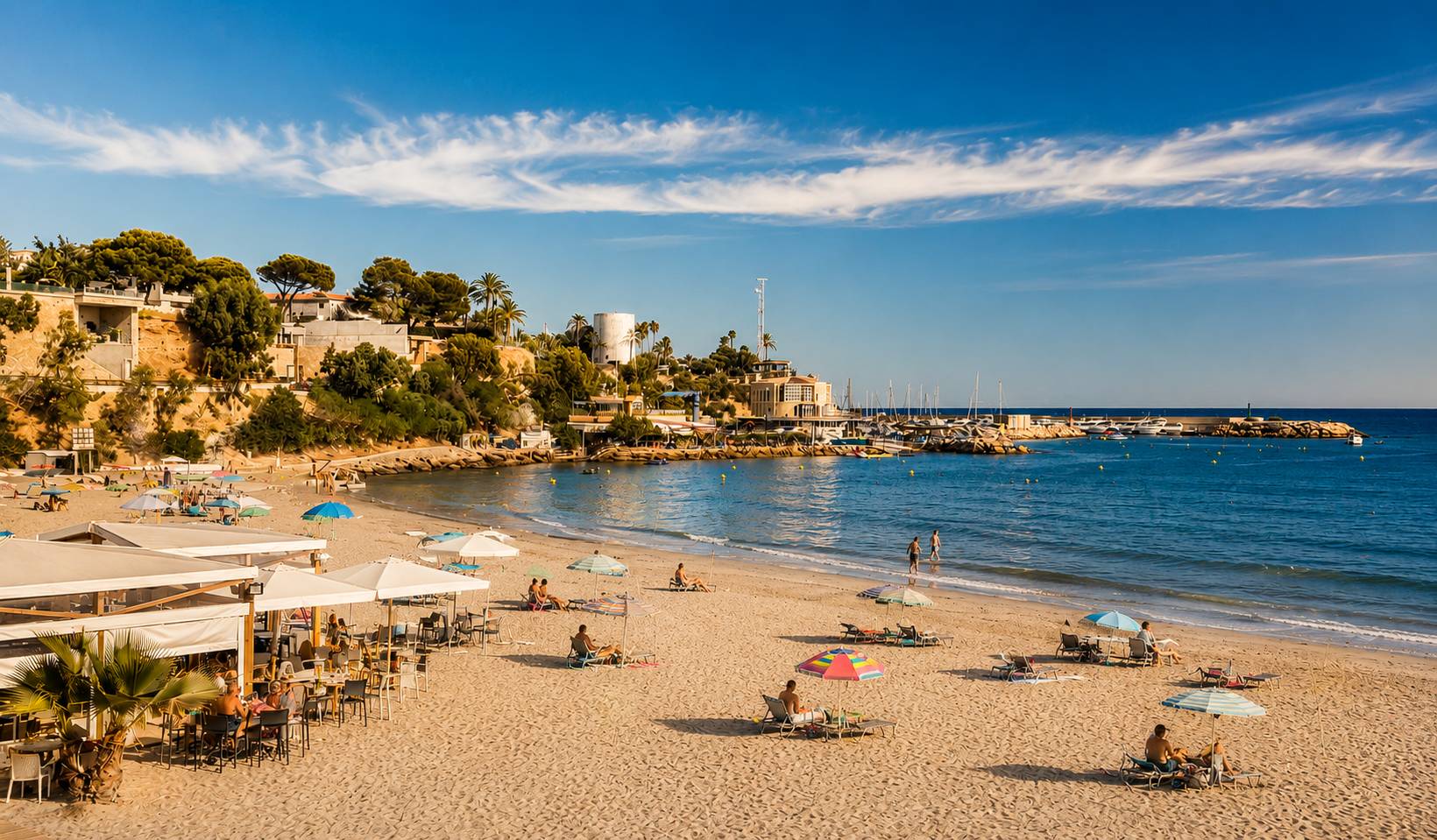
Sandy beach with a few small rocky coves. Just over the border into Alicante province, this stretch of coast has some of the cleanest, Blue Flag–rated beaches in the region. Cabo Roig itself is a small, sheltered cove with a scenic seafront path, while La Zenia next door has a longer sandy beach and the well-known La Zenia Boulevard shopping centre right behind it — handy if you want to turn the trip into a full day out with lunch and shopping included.
Address: Avenida del Faro, 03189 Cabo Roig, Orihuela, Alicante, Spain (Get Location).
Mazarrón & Bolnuevo — dramatic scenery, fewer crowds (35–40 min)
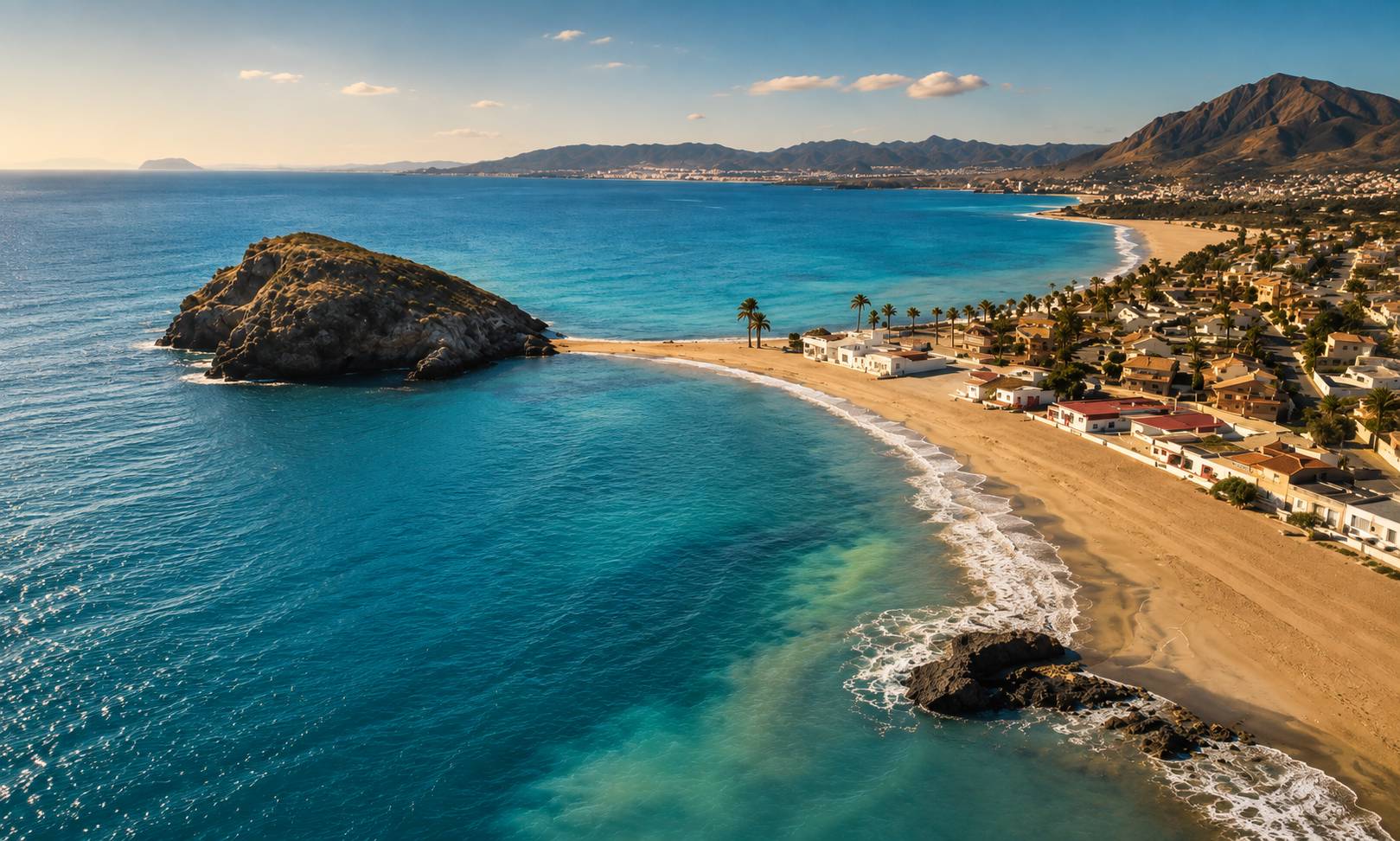
Sandy beach, backed by the wind-sculpted sandstone cliffs of “Las Gredas”. Heading the other direction along the Costa Cálida, Mazarrón’s beaches feel less touristy than La Manga or Orihuela Costa. Playa de Bolnuevo is the standout: a long stretch of sand backed by dramatic, almost lunar rock formations. Playa de la Isla, with its small rocky island just offshore, is another good option and sits close to an important underwater archaeological site.
Address: Playa de Bolnuevo, 30877 Mazarrón, Murcia, Spain (Get Location).
Calblanque Regional Park — wild and protected (30–35 min)
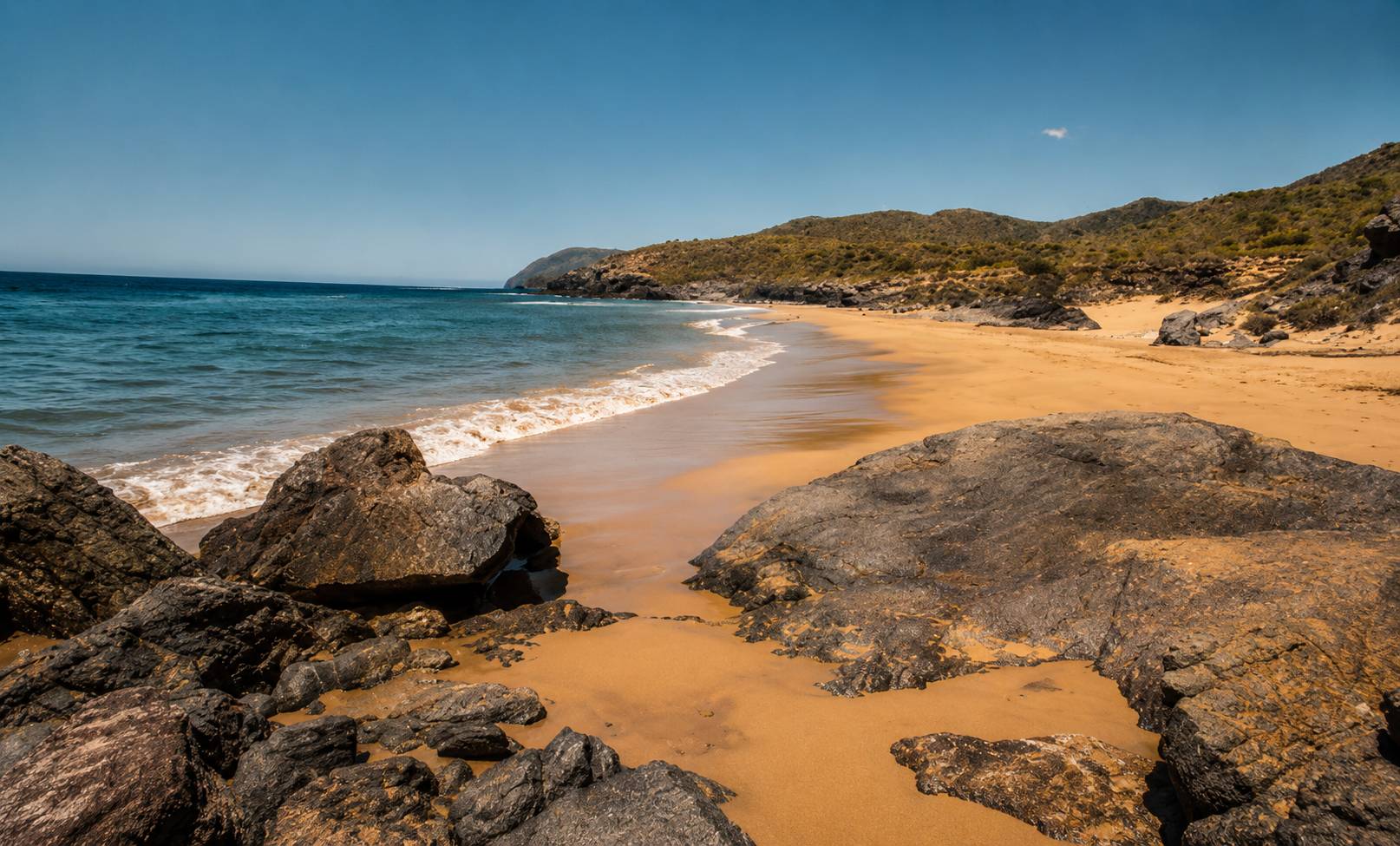
Sandy beach, undeveloped and dune-backed. One of the last untouched stretches of coastline in the Region of Murcia, Calblanque is a protected natural park with no beach bars, sunbeds, or built-up promenade — just dunes, pine-backed hills, and turquoise water. It’s the pick for anyone who wants a proper “wild beach” day. Bear in mind the access rules below before you go.
Address: Parque Regional de Calblanque, 30393 Cartagena, Murcia, Spain (Get Location).
Cala Reona (Cabo de Palos) — small, scenic cove (30 min)
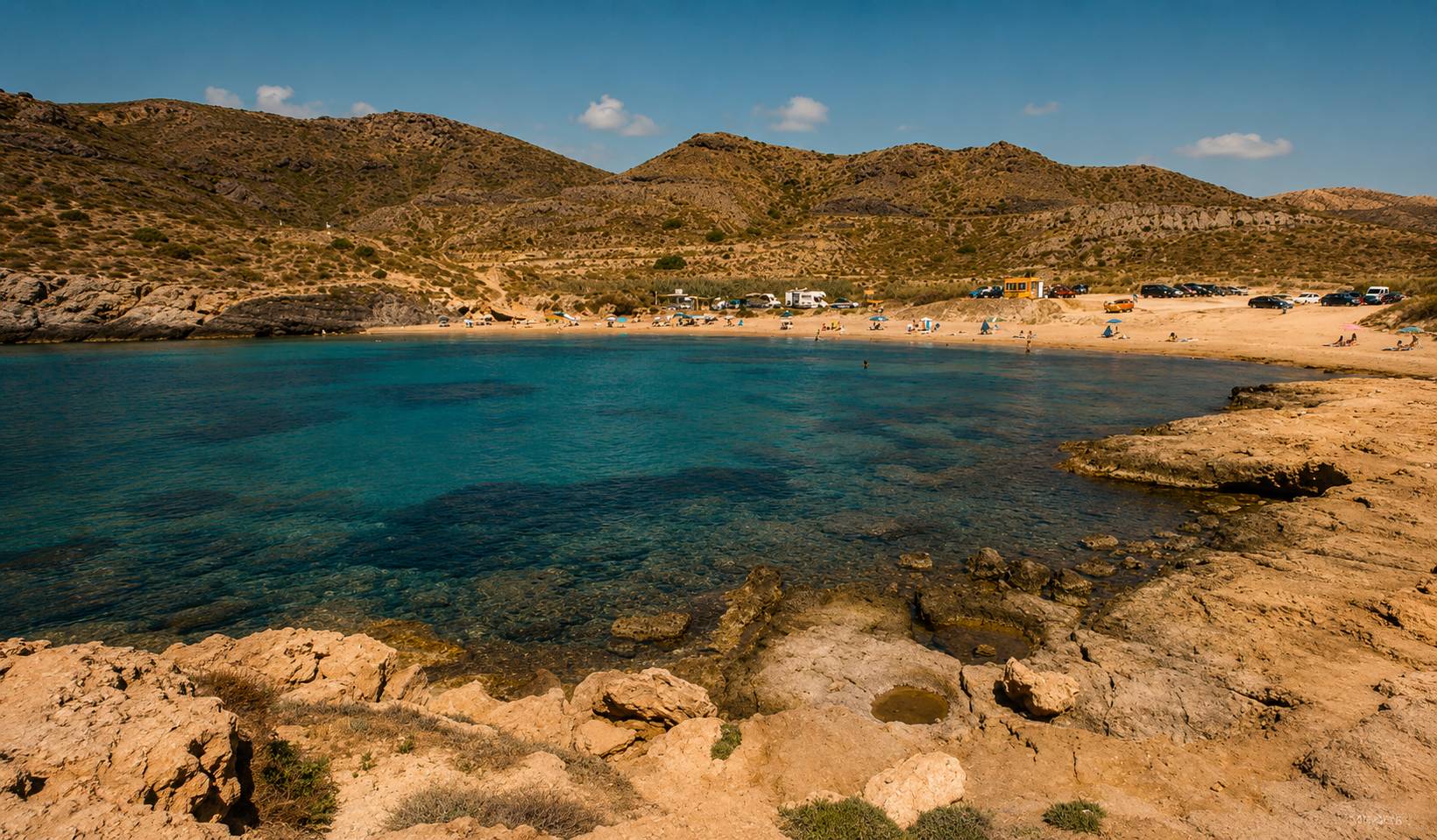
Sandy cove, around 200 metres of beach. Right on the edge of Calblanque near Cabo de Palos, Cala Reona is a compact, picturesque cove popular with swimmers and divers thanks to its clear water and rocky surroundings. It also marks the start of one of the coastal hiking trails into the natural park.
Address: Cala Reona, 30370 Cabo de Palos, Cartagena, Murcia, Spain (Get Location).
Playa de Portmán — the black sand beach (35–40 min)
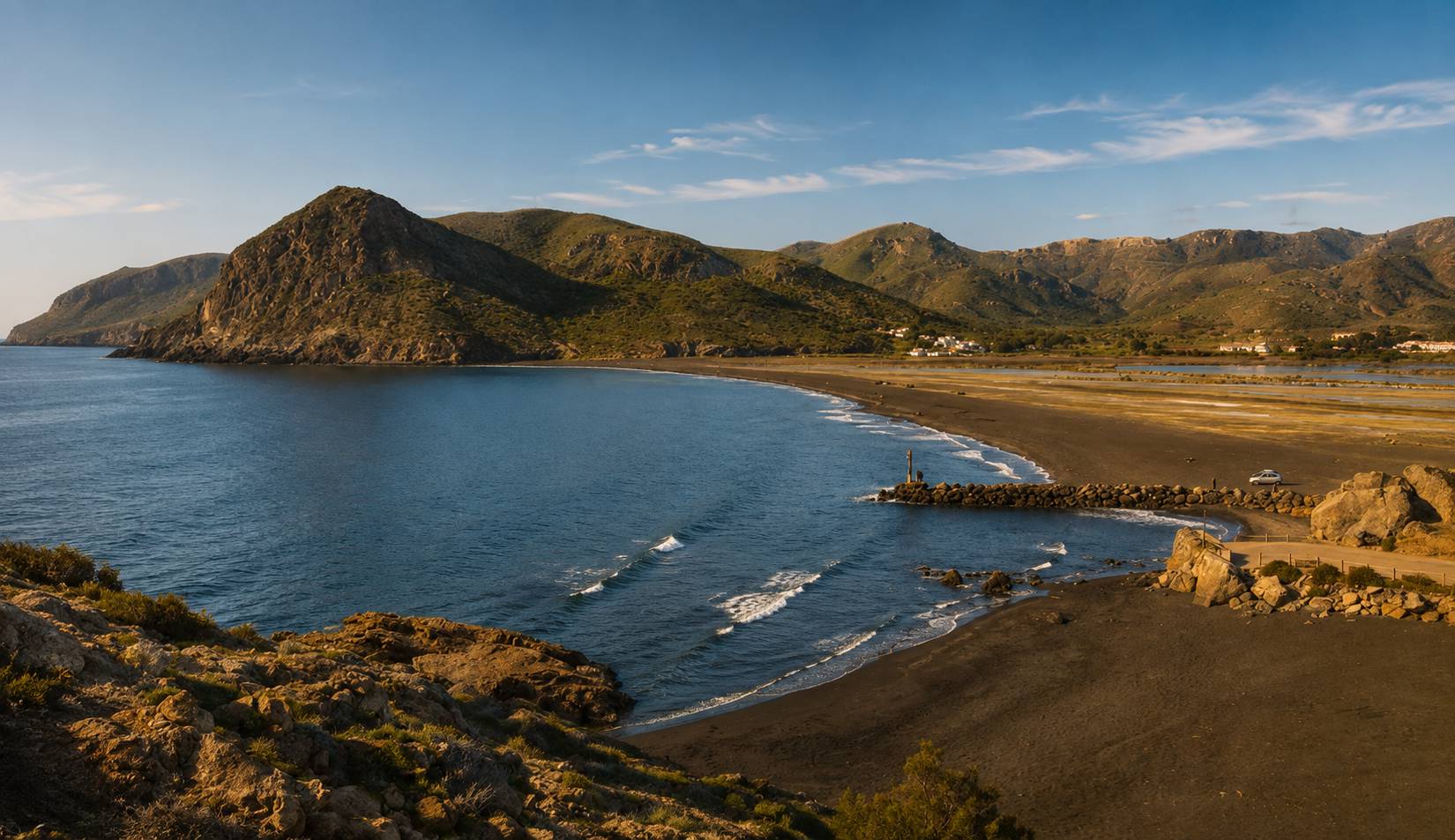
Black volcanic-looking sand — genuinely unlike anywhere else on this list. Portmán’s beach owes its striking dark colour to the area’s mining history, and it’s become a unique and popular spot for a swim precisely because of it. The bay is framed by hills on both sides, making for one of the most photogenic beaches in the region — well worth the drive for the novelty alone.
Address: Playa de Portmán, 30366 Portmán, La Unión, Murcia, Spain (Get Location).
Cala Cortina (Cartagena) — the city beach (35–40 min)
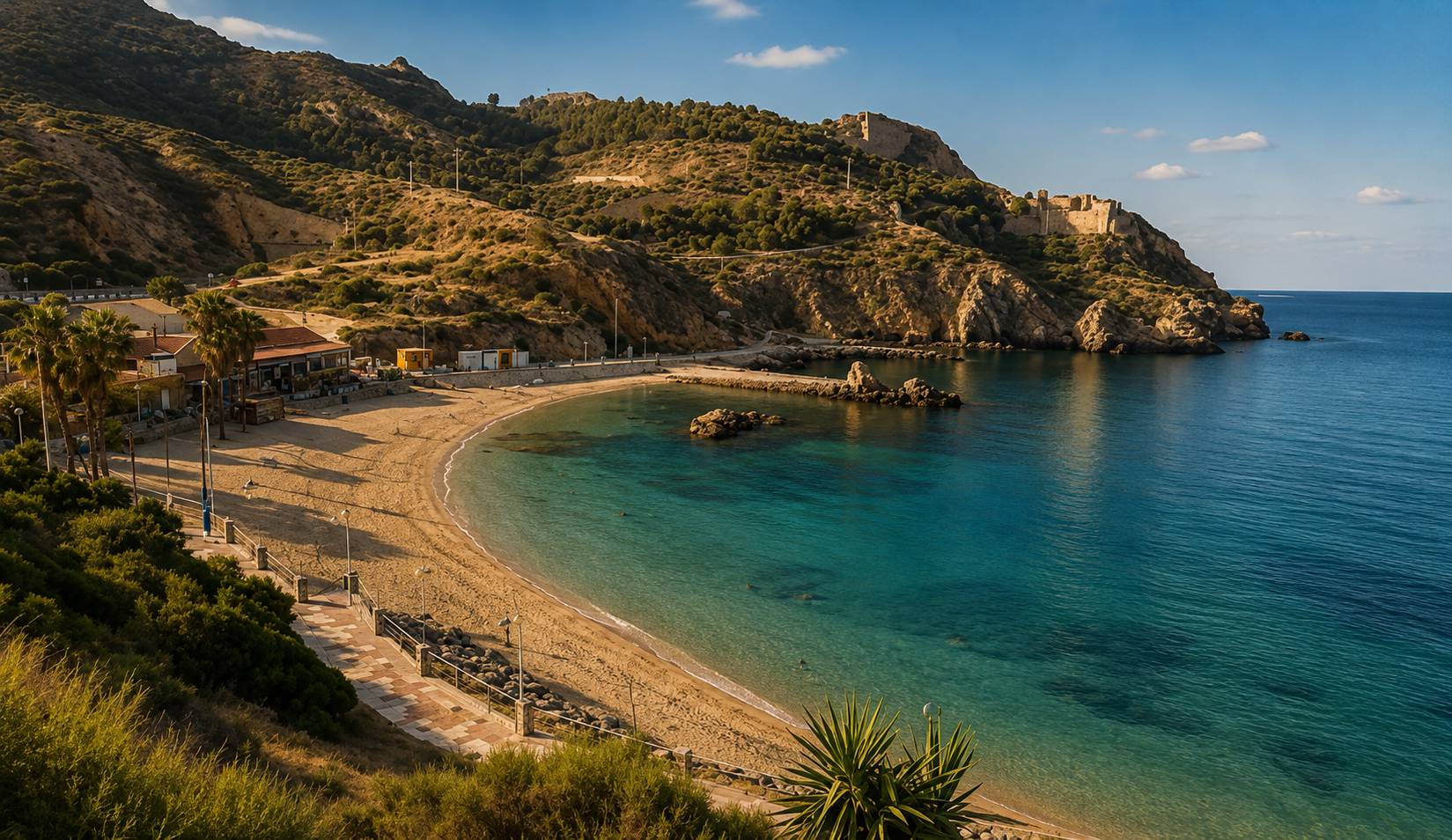
Sandy cove. Tucked between cliffs just outside Cartagena’s city centre, Cala Cortina is the closest beach to the city and a favourite with locals — easy to combine with a stroll around Cartagena’s old town, Roman theatre, and harbour. Expect a lively atmosphere in summer, with a beach bar and lifeguard service on hand.
Address: Cala Cortina, 30202 Cartagena, Murcia, Spain (Get Location).
Playa del Portús (Cartagena) — quiet cove, clothing-optional area (40–45 min)
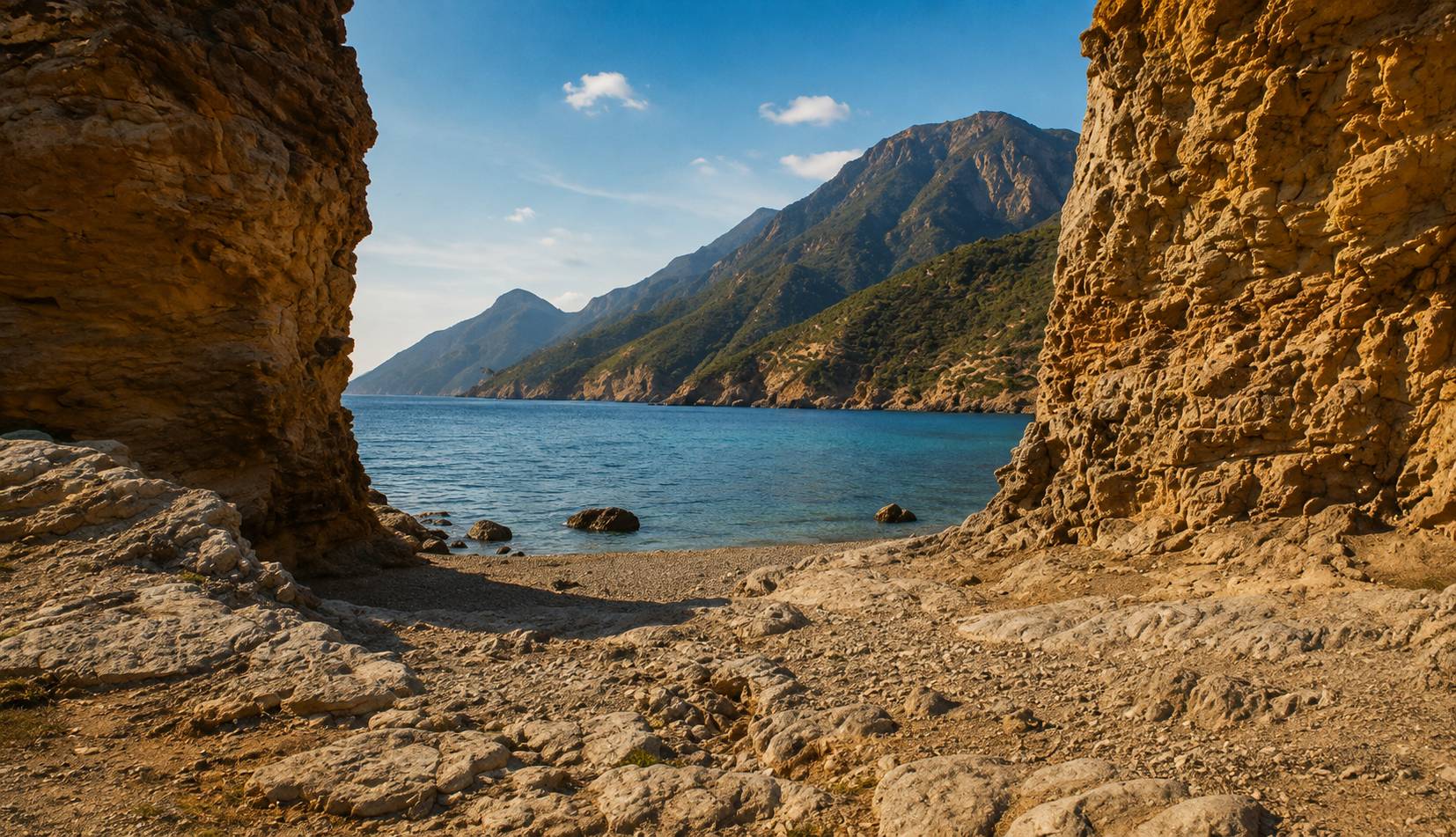
Sandy beach in a sheltered cove. A scenic, relatively undeveloped beach west of Cartagena, popular with divers and known for having a designated nudist area at one end — worth knowing before you go if that’s not your thing. The setting, backed by hills and pine woods, is one of the prettiest on this list.
Address: Playa del Portús, 30393 Cartagena, Murcia, Spain (Get Location).
Access & practical notes
- Calblanque Regional Park: private vehicle access is restricted in summer (roughly June–September), typically closing to cars around 9am. A shuttle bus service runs from the park entrance during the day for a small fee. Plan to arrive early or use the bus.
- Playa del Portús: has a designated nudist area at one end of the beach — the rest of the beach is a regular family beach.
- Parking: La Manga, Cabo Roig/La Zenia, and Cala Cortina get very busy in July–August; arrive before mid-morning in high season.
- Blue Flag beaches: several beaches in Orihuela Costa and La Manga carry Blue Flag status, meaning lifeguards and facilities are provided in season (roughly June–September) — outside those dates, services are reduced or unavailable.
- Drive times: all estimates above are from Mar Menor Golf Resort and assume normal traffic; allow extra time on summer weekends, and a bit less if you’re starting from Los Alcázares or Torre-Pacheco.
Have a favourite beach near the resort we didn’t mention? Let us know via the Community Chat or Contacts page.