
Whether you live at Mar Menor Golf Resort, Santa Rosalía Lake & Life Resort, or La Torre Golf Resort, in one of the nearby towns — Torre-Pacheco, Los Alcázares, San Javier, Santiago de la Ribera, or La Manga del Mar Menor — or simply somewhere else around the Mar Menor, winters here rarely dip below jacket weather. But real snow and real skiing are closer than most residents think, and Spain has far more ski terrain than people expect: from budget-friendly family slopes in Teruel to mainland Spain’s highest resort, to the country’s largest ski area in the Aragonese Pyrenees, to the full Alpine-style experience in Andorra. Below is the complete picture — every serious ski resort reachable from the Mar Menor, how far each one is, what it costs, what the roads are like in winter, and where to check live snow conditions before you set off.
Nearby & mid-range options
Javalambre & Valdelinares — Teruel, Aragón (365–370 km / 3.5-4h)
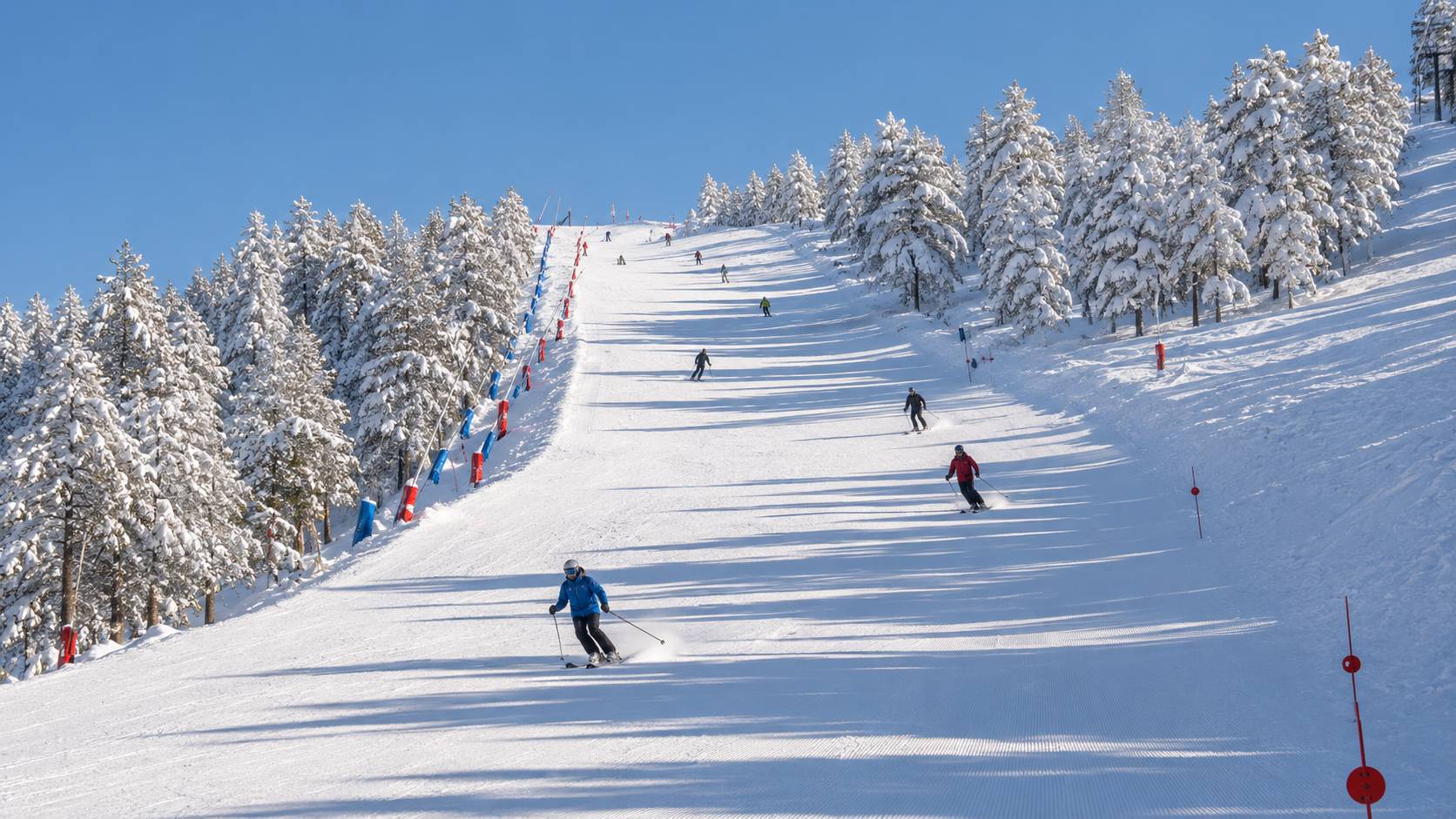
The closest formal ski resorts to Murcia, and the most budget-friendly option on this list. Technically two separate stations sharing one ski pass — Javalambre and Valdelinares sit about 75 minutes apart by road, in two different mountain ranges (Sierra de Javalambre and Sierra de Gúdar). Both are smaller, lower-altitude resorts (topping out around 2,020 m) that lean toward beginners and families rather than serious off-piste skiing — wide, gentle runs, ski schools, and a relaxed pace. Valdelinares itself is the highest village in Spain, which gives it a genuinely alpine feel despite being a fraction of the distance of the bigger resorts.
Because these are lower-altitude stations, snow reliability depends more on the season than at Sierra Nevada or the Pyrenees — both now have significant snowmaking coverage, but it’s worth checking conditions before driving out on a marginal week.
- Distance: ~365 km (Javalambre) / ~372 km (Valdelinares) from Murcia — roughly 3.5-4h driving.
- Typical season: December to March, weather-dependent.
- Day pass: from around €18–29 for a single adult day (varies by date/demand) — the cheapest skiing on this list by a wide margin.
- Good for: first-timers, families with kids, a low-stakes budget day or weekend on snow.
- Website: javalambre-valdelinares.com
- Live webcams: the resort’s own webcam page covers both stations.
Sierra Nevada — Granada, Andalucía (310–345 km / 3.5-4h)

Mainland Spain’s most famous ski resort, and the highest — the top lift reaches close to 3,300 m at Veleta, making this the most snow-reliable option on this list along with the Pyrenees, and usually the longest season in Spain (often into April or later). It’s also the only ski resort in Europe with genuine Mediterranean views — on a clear day you can see the sea from the slopes, and Granada city (with the Alhambra) is only about 45 minutes below the resort, so it’s easy to combine a ski day with a proper city trip.
Sierra Nevada is bigger and more varied than the Teruel resorts, with terrain for every level, a lively resort village (Pradollano), and a well-developed après-ski scene — it draws skiers from across Andalucía and increasingly from further afield.
- Distance: ~310–345 km depending on route — roughly 3.5-4h driving. (One fast route uses a restricted/private road according to Google Maps — the A-7/A-92N routing is the more reliable option.)
- Typical season: late November/December to April, sometimes later.
- Day pass: roughly €50–52 for an adult (peak season can run higher).
- Good for: intermediate to advanced skiers, longer weekend trips, combining skiing with a Granada city break.
- Website: sierranevada.es
- Live webcams: the resort runs its own live webcam network (Pradollano, Borreguiles, Veleta and more); also available via Windy.com’s webcam service.
Puerto de Navacerrada & Valdesquí — Sierra de Guadarrama, Madrid (~460 km / 4.5h)

Two small, family-oriented resorts in the mountains just outside Madrid — not a destination in themselves, but worth knowing about if a trip north ever combines skiing with visiting the capital. Both are modest in size (Valdesquí is the larger and better-equipped of the two), with short, gentle runs aimed squarely at beginners, families, and day-trippers from Madrid rather than serious skiers chasing vertical.
- Distance: ~460 km from Murcia — around 4.5h driving.
- Typical season: December to March, and the least snow-reliable resorts on this list — both depend heavily on snowmaking and can close for days at a time in a dry spell.
- Day pass: Valdesquí from around €32–44 for an adult depending on season; Puerto de Navacerrada is cheaper, roughly €22–26.
- Good for: a short, low-key ski day bolted onto a Madrid trip; not worth a dedicated journey from Murcia on its own.
- Websites: valdesqui.es / puertonavacerrada.com
The Pyrenees & Andorra — worth the longer trip
This is where Spain’s serious skiing is. All of the resorts below sit roughly 670–730 km from Murcia (6.5–8 hours driving), so realistically these are weekend-or-longer trips, not day outings — most people either do the full road trip up the Mediterranean coast, or fly into Barcelona/Zaragoza and drive the last stretch.
Andorra (Grandvalira / Vallnord) — Pyrenees (~670 km / 7h)

The full ski-holiday experience, and the largest ski area in the Pyrenees — Grandvalira alone covers over 200 km of pistes across multiple linked resort areas, with terrain and infrastructure closer to what you’d find in the Alps than anywhere else in this list. What makes Andorra worth the distance: consistently excellent snowmaking and grooming, terrain for every level, genuinely good value for the quality on offer compared with the Alps, and — as a bonus most visitors factor in — tax-free shopping in Andorra la Vella itself.
- Distance: ~670 km from Murcia — around 7h driving, or fly to Barcelona and transfer (roughly 3 hours by road from the airport).
- Typical season: late November to April, among the most reliable in the Pyrenees thanks to altitude and snowmaking.
- Day pass: from around €44–52 for an adult, depending on dates and how far ahead you book (prices are dynamic and rise closer to peak dates).
- Good for: a proper multi-day ski trip, mixed groups (all levels), anyone who wants the “real” Alpine-style experience.
- Website: grandvalira.com
- Live webcams: Grandvalira’s own site has live cams; also available via Windy.com.
Formigal-Panticosa — Valle de Tena, Huesca (~696 km / 7h)
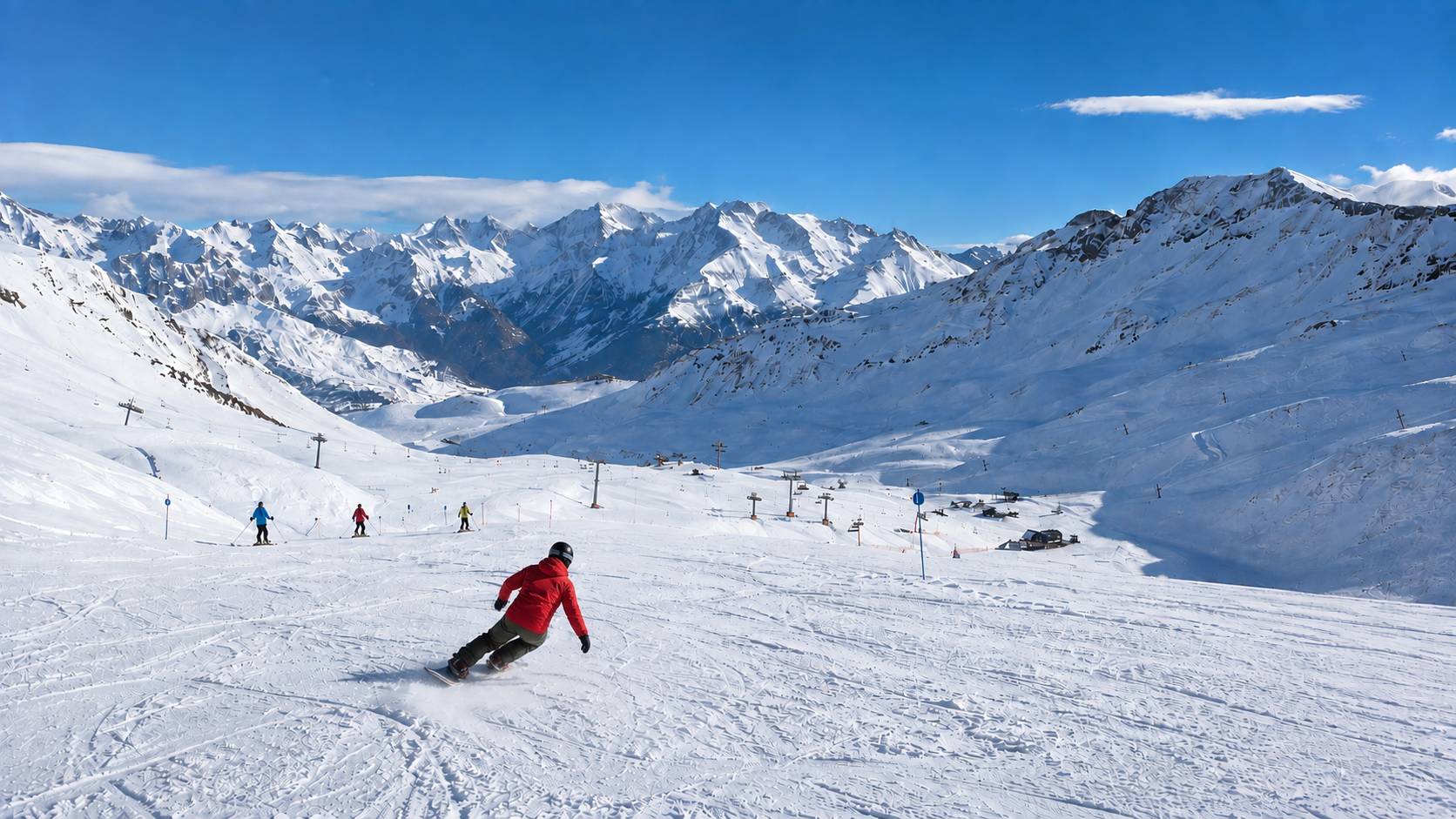
Spain’s single largest ski area, full stop — 180 km of pistes and 147 marked runs, bigger than any other resort in the country including Baqueira-Beret and Sierra Nevada. Formigal and Panticosa are linked into one connected domain in the Aragonese Pyrenees, with a modern, purpose-built resort village at the base and terrain that genuinely rivals mid-sized Alpine resorts. It’s part of the Aramón group, along with Cerler, Javalambre and Valdelinares (see the multi-resort pass note below).
- Distance: ~696 km from Murcia — roughly 7h driving.
- Typical season: early December to April.
- Day pass: around €61 for an adult at the ticket window (discounted online); a reduced beginner-area pass is available from around €34.50.
- Good for: intermediate to advanced skiers who want maximum terrain variety; groups where everyone skis a different level.
- Website: formigal-panticosa.com
Cerler — Valle de Benasque, Huesca (~701 km / 7.5h)

Aragón’s highest resort, topping out at 2,630 m on the Gallinero peak, with the biggest vertical drop in the Pyrenees (1,130 m) and Spain’s single longest ski run — the famous “Cerler 9 Km,” a 9-kilometre descent from the summit down to the village. It’s a smaller domain than Formigal but has a reputation among serious skiers for genuinely challenging terrain and a quieter, more traditional Pyrenean-village feel.
- Distance: ~701 km from Murcia — roughly 7.5h driving.
- Typical season: December to April.
- Day pass: similar range to Formigal (Aramón group pricing, roughly €55–61 for an adult).
- Good for: more experienced skiers looking for vertical and a proper long run; anyone who wants Pyrenees skiing without Andorra’s crowds.
- Website: cerler.com
Candanchú & Astún — Valle del Aragón, Huesca (~704 km / 7h)

Two neighbouring resorts sold together as a joint “100K” pass, near the French border above Jaca. Candanchú is Spain’s oldest ski resort, founded in 1928, with nearly a century of history and around 100 km of skiable terrain between the two stations combined. Together they have a reputation as an excellent all-round, less crowded alternative to the bigger-name resorts — solid terrain for every level without Formigal or Baqueira’s peak-weekend traffic.
- Distance: ~704 km from Murcia — roughly 7h driving.
- Typical season: December to April.
- Day pass: joint Astún–Candanchú pass from around €43–47 for an adult.
- Good for: a quieter Pyrenees option with genuine skiing history; families and mixed-level groups.
- Websites: candanchu.com / astun.com
Baqueira-Beret — Val d’Aran, Lleida (~725 km / 8.5h)

Spain’s most prestigious ski resort, and its most expensive — the traditional favourite of the Spanish royal family, with a day pass now past €70. It’s the third-largest ski domain in the Pyrenees after Formigal and Grandvalira, spread across a huge, high-altitude area in the Val d’Aran with genuinely excellent snow record and a polished, upmarket resort infrastructure (which shows in the prices for lodging and dining, not just the lift pass).
- Distance: ~725 km from Murcia — roughly 8.5h driving, the longest trip on this list.
- Typical season: early December to April, very reliable snow.
- Day pass: around €71.50 for an adult (2025–26 season) — the highest on this list.
- Good for: a special-occasion ski trip, skiers who want the best snow and infrastructure Spain has to offer and don’t mind paying for it.
- Website: baqueira.es
La Molina & Masella (Alp 2500) — Girona, Pyrenees Catalanes (~697 km / 7h)
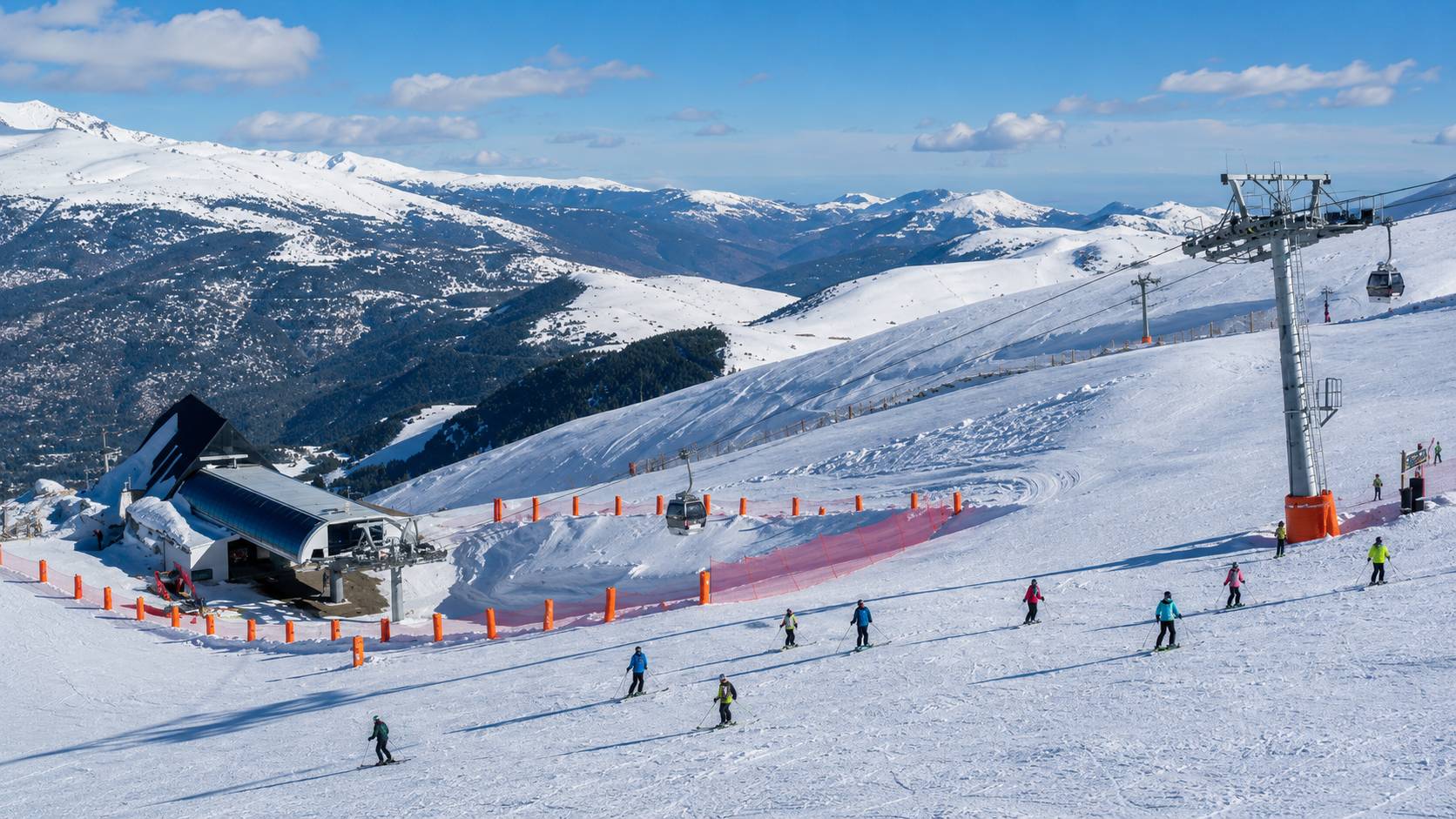
A joint domain of two connected resorts in the Catalan Pyrenees, sold together as “Alp 2500” — one of the largest ski areas in the Pyrenees at around 145 km of combined pistes, and widely considered one of the best value-for-money options in the range. La Molina is Spain’s original ski resort area (skiing here dates back to the 1940s) and has a strong reputation for ski schools and family terrain; Masella’s side tends to have more varied, slightly more challenging runs.
- Distance: ~697 km from Murcia — roughly 7h driving.
- Typical season: December to April.
- Day pass: joint Alp 2500 pass, typically mid-range for the Pyrenees — worth comparing against a single-resort pass if you only plan to ski one side.
- Good for: good value for a full Pyrenees experience without Baqueira or Andorra pricing; strong for families and beginners.
- Websites: masella.com / lamolina.cat
Further afield: Cordillera Cantábrica (Northern Spain)

For completeness: northern Spain’s Cordillera Cantábrica has a cluster of smaller, family-run ski areas — Alto Campoo (Cantabria), San Isidro, Fuentes de Invierno, Valgrande-Pajares and Leitariegos (all in Asturias/León), and Manzaneda (Galicia). These are modest, low-key resorts that serve local weekend traffic from Asturias, Cantabria, León and Galicia — none of them are realistic day-or-weekend options from the Mar Menor given the distance (well over 700–800 km, closer to 8–9 hours each way with no direct motorway for most of the route), and none offer anything the Pyrenees or Sierra Nevada don’t do better and closer. Worth knowing they exist, but not a practical choice from here.
Bonus: the closest snow of all (no skiing, but free)
Sierra Espuña — Murcia Region (~45–60 min)

Not a ski resort — there are no lifts or pistes — but Sierra Espuña is the one place within the Región de Murcia itself that occasionally gets a proper snow dusting in cold snaps, usually a handful of times each winter. No booking, no ski pass, just a short drive up into the pines to see (and play in) real snow when a cold front comes through. The park is also home to Spain’s historic “pozos de la nieve” (snow wells) — centuries-old stone structures once used to pack and store winter snow as ice for the Kingdom of Murcia, which make an interesting stop even outside snowy weeks.
Not something to plan a trip around (snowfall is unpredictable and doesn’t happen every winter), but worth keeping an eye on local weather alerts for — it’s the only “is there snow near me right now” option that doesn’t involve a multi-hour drive.
Practical notes before you go
- Chains or winter tires: Spanish traffic law (DGT) requires chains or 3PMSF-certified winter tires when a road is officially flagged as snow/ice-affected — there’s no fixed national date, but it’s typically enforced on mountain routes from around November to March. Carrying chains is a sensible precaution for any of these trips even if you don’t expect to need them — several access roads (especially to Javalambre/Valdelinares, Sierra Nevada’s access road, and any of the Pyrenees resorts) can require them with little notice after snowfall. Maximum speed with chains fitted is 50 km/h.
- Multi-resort passes are worth checking: the Aramón group (Formigal-Panticosa, Cerler, Javalambre and Valdelinares) sells combined season and multi-day products that cover all four of its resorts, and Astún–Candanchú sell a single joint “100K” pass — worth comparing against single-resort tickets if you’re planning more than one trip to the same region in a season.
- Check conditions before you leave: every resort on this list publishes live webcams and piste reports — worth checking on the morning you travel, especially for the lower-altitude resorts (Teruel, Madrid) where snow cover is less guaranteed than at Sierra Nevada, the Pyrenees, or Andorra.
- Renting gear: all of these resorts have on-site rental shops — no need to bring your own skis/boots unless you already own them.
- Booking ahead: lift passes are often noticeably cheaper booked online in advance rather than at the ticket window, especially at the larger resorts (Sierra Nevada, Grandvalira, Formigal, Baqueira).
- Fuel/rest stops: every one of these drives involves several hours on mostly motorway — plan a fuel and food stop, especially for the Pyrenees and Andorra trips.
Checking live snow conditions (webcams)
Every resort above runs its own live webcam pages (linked in each section) — the fastest way to see current snow cover before driving out. For a richer view, Windy.com hosts live webcams for several of these resorts, including Sierra Nevada and Grandvalira.